Segment: Public Sector
AI Solution for the Public Sector
In the public sector, good decisions and accountability depend on organized and traceable public information, not on manual searches and hastily produced reports.
In practice
How Bytebio help
- Continuous consulting (Governari)We operate as technical support to the Cabinet and management, organizing and delivering intelligence based on public data.
- Collection, organization, and curation of public data.We structured official sources (sessions, minutes/transcripts, diaries and portals) for research and analysis.
- Executive analyses and briefingsWe generate thematic views and on-demand reports to support decision-making and prioritization (e.g., most recurring themes, demands by area, voting history).
- AI for assisted consultation and alerts (Daise)We provide a WhatsApp access point for questions, summaries, and alerts, based on the infrastructure organized by the consulting firm.
Want to see the details?
Everything this page contains, organized by topic. Tap to open.
Municipal governments, offices, and secretariats need to monitor legislative demands, official publications, performance indicators, and sensitive issues with agility and responsibility. In practice, information is scattered across session broadcasts, official gazettes, portals, spreadsheets, and messages. This increases rework, hinders prioritization, and slows down responses to demands from the public, the legislature, and oversight bodies.
A Bytebio acts in this context with the approach of Governari: an ongoing consulting service in public information management, involving the collection, organization, and curation of public data to generate actionable analyses and deliverables. When it makes sense, we use AI with clear boundaries (such as daise, via WhatsApp) for assisted consultation, summarization and alerts, maintaining traceability, transparency and explicit prohibitions on use.
Main challenges of the segment
-

Public information is scattered
Legislative sessions, official gazettes, and transparency portals are available, but not necessarily organized for quick reference. The team wastes time "searching" instead of analyzing and acting.
-

Low predictability of demand.
Relevant issues arise in plenary sessions and publications with little warning, and only become urgent when they are already underway. Without structured monitoring, management reacts too late.
-

Difficulty in transforming data into action.
Having access to data doesn't solve the problem when curation, context, and executive synthesis are lacking. The consequence is poorly based decisions and reactive communication.
-

Transparency and accountability
Management needs to communicate decisions, deliverables, and priorities clearly and consistently. Without organized tracking and evidence, communication becomes vulnerable to noise.
-

Citizen service without restrictions
Questions and requests arrive through multiple channels and require triage and routing. Without standardization and record-keeping, customer service becomes a bottleneck, and it's difficult to measure quality.
-

Governance and responsible use
Analyses need to be objective, based on public data, and have a legitimate management purpose. Without explicit rules and prohibitions, the risk of misuse increases.
Main challenges of the segment
-
Public information is scattered
Legislative sessions, official gazettes, and transparency portals are available, but not necessarily organized for quick reference. The team wastes time "searching" instead of analyzing and acting.
-
Low predictability of demand.
Relevant issues arise in plenary sessions and publications with little warning, and only become urgent when they are already underway. Without structured monitoring, management reacts too late.
-
Difficulty in transforming data into action.
Having access to data doesn't solve the problem when curation, context, and executive synthesis are lacking. The consequence is poorly based decisions and reactive communication.
-
Transparency and accountability
Management needs to communicate decisions, deliverables, and priorities clearly and consistently. Without organized tracking and evidence, communication becomes vulnerable to noise.
-
Citizen service without restrictions
Questions and requests arrive through multiple channels and require triage and routing. Without standardization and record-keeping, customer service becomes a bottleneck, and it's difficult to measure quality.
-
Governance and responsible use
Analyses need to be objective, based on public data, and have a legitimate management purpose. Without explicit rules and prohibitions, the risk of misuse increases.
How Bytebio help
-
✅ Ongoing consulting (Governari)
We operate as technical support to the Cabinet and management, organizing and delivering intelligence based on public data. The municipality contracts expertise and delivers services, not a software license.
-
✅ Collection, organization, and curation of public data
We structure official sources (sessions, minutes/transcripts, journals, and portals) for research and analysis. We maintain traceability of origin and clear criteria for what is organized.
-
✅ Executive analyses and briefings
We generate thematic views and on-demand reports to support decision-making and prioritization (e.g., most recurring themes, demands by area, voting history). The focus is on objectivity and practical utility.
-
✅ AI for assisted consultation and alerts (Daise)
We provide a WhatsApp access point for questions, summaries, and alerts, based on the infrastructure organized by the consulting firm. We use AI with clear boundaries and based on public data.
-
✅ Notifications and topic monitoring
We set up alerts for relevant publications, new projects, votes, and topics defined by management. This reduces surprises and improves response time.
-
✅ Restrictions and governance of use
We define guidelines and limits to prevent misuse (e.g., no personal files, no surveillance, no electoral purposes). We maintain language and scope aligned with legality and transparency.
possible results

Faster and more consistent response
Consultations, summaries, and evidence are available with less rework and greater traceability.
Better prioritization of topics
Thematic monitoring of legislative demands and publications to act sooner.

More operational transparency
Organized history for institutional communication and accountability based on verifiable information.

More structured service
Screening and routing of requests with registration and indicators for continuous improvement.
In the public sector, real gains come from organization, method, and responsibility in the use of information. BytebioThrough Governari, we structure public data, deliver curated and actionable analytics, and apply AI with clear boundaries (including access via WhatsApp) to support efficient, transparent, and well-governed management.

Insights for your business
We separate the hype from the reality . Here you'll find practical analyses of AI engineering, governance, and intelligent automation, focused on what truly works for decision-makers.
-
 applied AI
How to use Claude and Codex in your company without losing governance.
Each productive individual alone does not constitute governance. Consider a three-layered diagram for using Claude and Codex in teams and development, with Notion as the source of truth.
Read the insight -
 applied AI
JEV in CRM: AI that decides in milliseconds, and what changes in Kommo with Bytebio
Generative AI writes well, but makes slow and expensive decisions. JEV does the opposite: it responds in milliseconds, with probability and confidence. See how it qualifies leads and updates the... Kommo with Bytebio and Harnz.
Read the insight -
 Internal applications
Vibe coding in the company: what separates an afternoon app from the system that supports its operation.
AI-generated app works in demo but breaks due to permission, volume, and integration issues. Understand what separates a prototype from a system that can handle operation.
Read the insight -
 Process automation
Mistakes consultants make in automation (and how to avoid them)
Discover 4 common mistakes in automation projects and practical solutions to avoid them: process, people, scope, and measurement.
Read the insight -
 Process automation
How to reduce operational workload: a practical guide to freeing up your team.
Does your team spend hours on repetitive tasks? Discover how to identify bottlenecks and reduce operational costs with integration, automation, and applied AI.
Read the insight -
 Internal knowledge
Document to avoid dependence: how to protect your operation against the departure of key personnel.
Does your operation depend on an employee who 'knows everything'? Understand the real risk of this dependency and how documenting processes protects your business from costly downtime.
Read the insight -
 applied AI
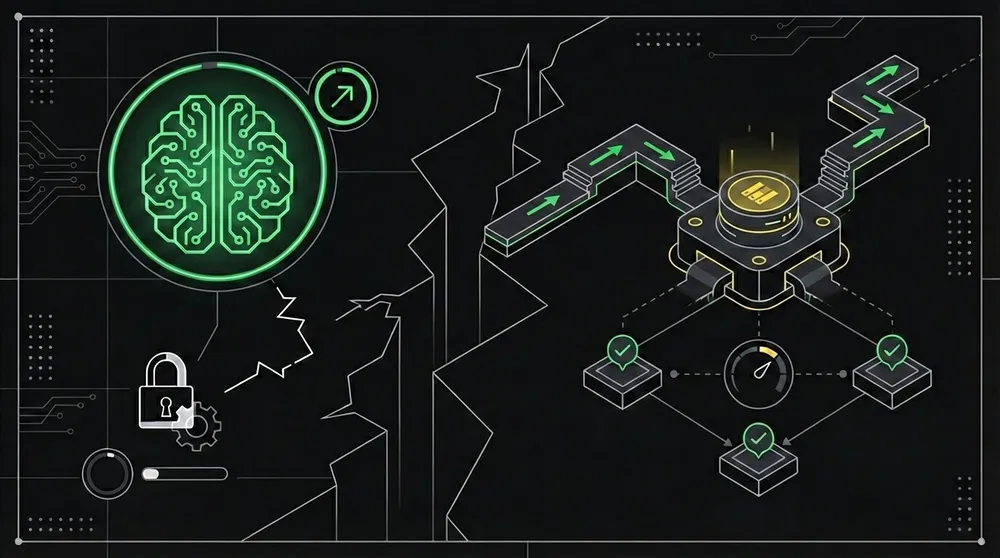
Phased AI implementation: how to get started without halting operations.
Discover how to implement AI without halting operations: parallel pilot, agreed-upon criteria before starting, and measurement before scaling.
Read the insight -
 Data and indicators
Competitive Intelligence: What your competitor knows about you (and you don't know about yourself)
Is your company operating blindly while competitors monitor you in real time? Understand how competitive intelligence and data visibility are changing the game.
Read the insight -
 Operation and support
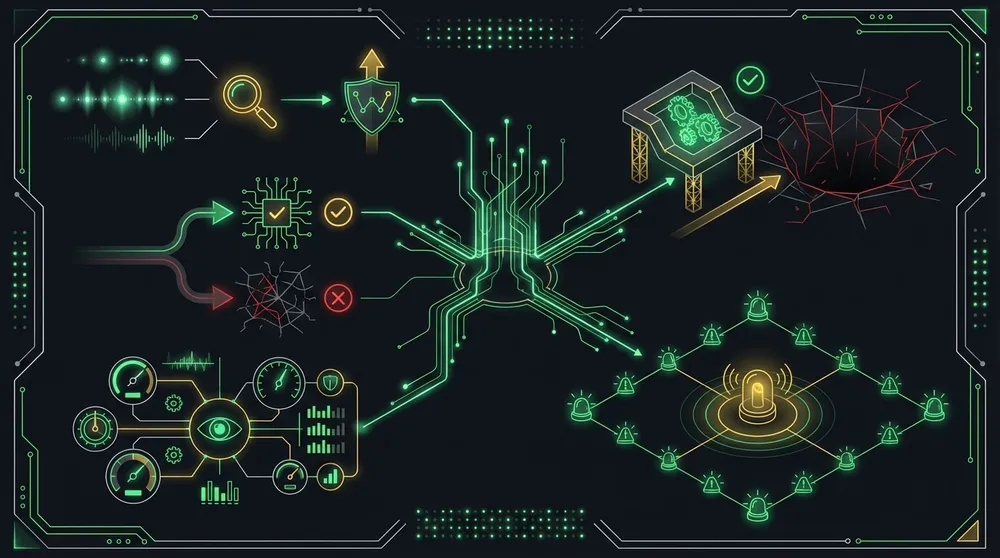
Silent signs that your operation is about to break down (and how to fix them beforehand)
Discover the 8 operational warning signs that precede crises, how to create early alerts, and how to avoid collapses before they impact results.
Read the insight -
 Sales and CRM
CRM as an opportunity radar: redefining B2B portfolio management
Transform your CRM into an opportunity radar. Learn how to integrate ERP data to anticipate sales, reduce churn, and generate recurring revenue in B2B portfolio management.
Read the insight -
 applied AI
Beyond technology: Why AI governance defines success or failure.
Understand why AI governance is as important as the technology itself. Explore key pillars such as privacy, traceability, and compliance (LGPD).
Read the insight -
 applied AI
How do you separate AI promises from solutions that actually work?
Learn how to identify AI hype versus real solutions for your business. See warning signs, ROI metrics that matter, and practical automation case studies.
Read the insight -
 applied AI
AI Engineering: How to transform technology into real results for your business.
Discover how AI Engineering connects systems, orchestrates intelligent agents, and transforms automation into measurable results for your business.
Read the insight -
 Process automation
What should you automate first when you can't automate everything?
Learn how to decide what to automate first using objective criteria of impact, complexity, and risk. See the prioritization matrix and examples of quick wins.
Read the insight


